



What is DFleet?
DFleet is a Fleet Management System (FMS) from DF Automation, a software platform that coordinates and manages an entire fleet of Autonomous Mobile Robots (AMRs) from a single centralized system. It plays a critical role in ensuring smooth and efficient intralogistics operations by assigning tasks to each robot, determining when and where tasks should be performed, and optimizing overall workflow. Beyond task allocation, DFleet also manages robot traffic to prevent congestion and collisions, allowing multiple AMRs to operate safely within the same environment.
In addition, the system connects the robot fleet with broader operational infrastructure, including business systems and supporting equipment, enabling seamless communication across the facility. While an individual AMR can be viewed as a robotic worker, DFleet acts as the intelligent supervisor, ensuring the entire fleet works together efficiently and productively.
How Does DFleet Assign Tasks to AMRs?
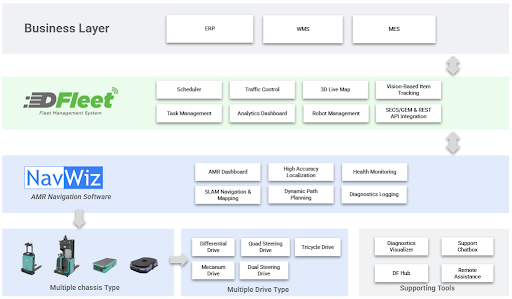
In a typical smart manufacturing or warehouse setup, DFleet operates at the center of the automation ecosystem. The AMR’s onboard navigation system(NavWiz) is responsible for functions such as route planning, positioning, and obstacle avoidance, ensuring the robot can move safely within its environment. At the same time, the customer’s business systems, such as Enterprise Resource Planning (ERP) or Warehouse Management Systems (WMS), manage higher-level operations including orders, inventory, and workflow planning. DFleet acts as the connecting layer between these systems, translating operational requirements into coordinated robot movements and tasks on the factory or warehouse floor.
In addition, the system connects the robot fleet with broader operational infrastructure, including business systems and supporting equipment, enabling seamless communication across the facility. While an individual AMR can be viewed as a robotic worker, DFleet acts as the intelligent supervisor, ensuring the entire fleet works together efficiently and productively.
DFleet Operational Control and Fleet Management Functions
- A Single View of the Fleet
Operators and supervisors can view the entire fleet on a single live map. Each robot’s location updates in real time, with colour indicators showing its current status whether it is executing a task, waiting at an intersection, or has stopped due to a safety event. Access to information is role-based, meaning different users see different levels of detail. For example, a line operator only sees relevant operational information, while supervisors have a full overview of the system.
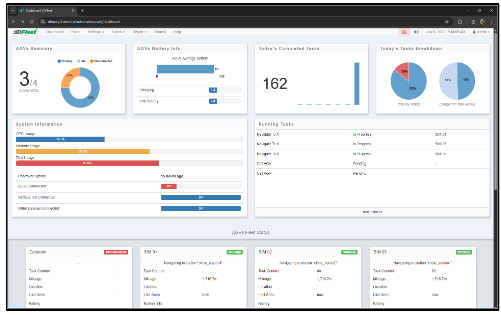
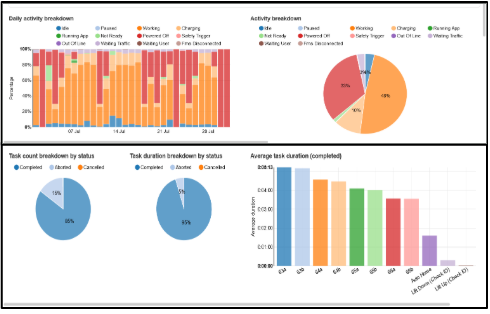
Figure 2: Live dashboard with fleet status, performance reports, and a real-time map.
- Smart Task Assignment
When a task is received, DFleet determines the most suitable robot to execute it. This decision is based on configurable rules defined by the customer, such as battery level, proximity, or workload distribution. The objective is to balance fleet usage and maintain smooth operational flow. DFleet also supports mixed robot fleets, allowing different types of AMRs such as lifting, towing, or hooking robots to operate in the same environment. Tasks are automatically assigned only to robots that are capable of performing them.
- Traffic Control between AMRs
When multiple robots compete for the same route or intersection, DFleet coordinates their movement by deciding the order of passage. This prevents deadlocks and collisions that could occur if robots operated independently, ensuring continuous and efficient traffic flow even during peak operational periods.
- 3D Map View
For larger or more complex facilities, DFleet provides a 3D map view of the operating environment. Zones, routes, and even CAD-based layouts of machinery can be integrated into the system, giving operators a clearer and more realistic visualization of fleet movement within the actual workspace.
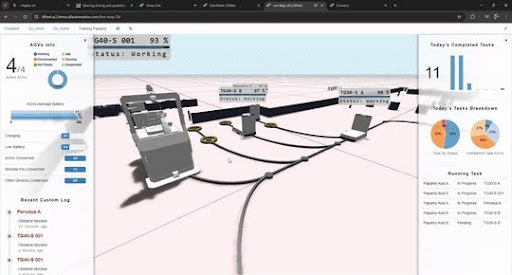
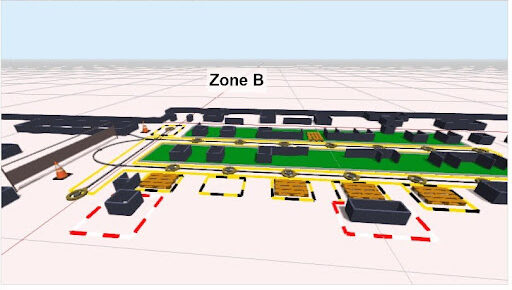
Figure 3: 3D map view of the working environment
- Working with Lifts, Doors, and Other Equipment
Real-world facilities are dynamic environments with infrastructure such as lifts, automatic doors, conveyors, and call buttons. DFleet integrates seamlessly with these systems, enabling robots to interact with the building infrastructure without manual intervention. This allows smooth end-to-end movement throughout the facility.
- Connection to Business Systems
DFleet integrates with existing enterprise systems such as ERP, WMS, WES, WCS, and MES. Operational orders are translated into robot tasks, while real-time status updates are sent back to these systems. This creates a fully connected workflow where the robot fleet becomes an active part of the operational ecosystem rather than a standalone system.
- Reports and Performance Tracking
Every robot activity and task is logged for analysis. Reports can be generated on a monthly basis or customized according to operational needs. This provides managers with insights into productivity, bottlenecks, and system performance, forming a foundation for OEE (Overall Equipment Effectiveness) analysis and continuous improvement.
Designed for Larger Sites
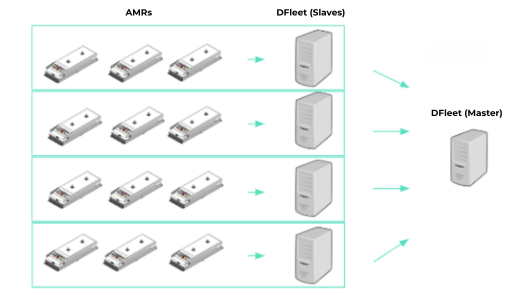
For large-scale facilities with multiple operational zones, DFleet supports a Master–Sub panel architecture. A central system oversees several local systems, each managing its own zone. This ensures responsiveness at the local level while maintaining full visibility and control at the site-wide level.
DFleet Advanced Features: Vision-Based Tracking and Troubleshooting Intelligence
- Seeing What’s on the Floor with Vision-Based Tracking
DFleet can tap into existing CCTV feeds to monitor activity within the working area. Using vision-based technology, it can detect objects such as pallets, recognise whether a location is full or empty, and feed this information back to the fleet. This allows robots to make smarter decisions on where to go, what to pick up, and when to reroute, without requiring constant operator input.
- Easier Troubleshooting
When something does not go as expected on the floor, teams need to quickly understand the cause. DFleet includes built-in diagnostic tools that present robot and task behaviour in a clear, visual format, rather than requiring engineers to analyse raw log files. This helps reduce troubleshooting time and allows the fleet to return to normal operation more quickly.
DF Hub: Post-Deployment Support
DFleet runs the day-to-day operations of the fleet. DF Hub is the companion platform that supports everything around the system once it is in place, including tracking each product, managing warranty and licensing, raising support tickets, and providing access to remote assistance when needed. Together, DFleet and DF Hub cover both the operational management of the fleet and the long-term support and lifecycle care of the products.
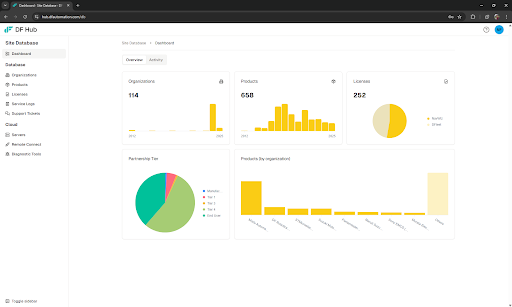
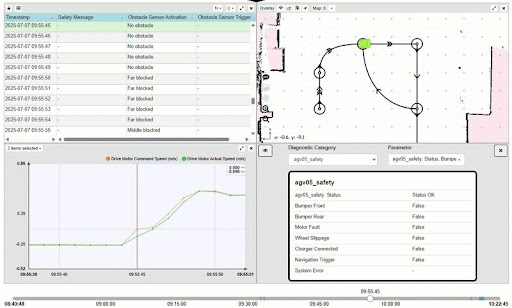
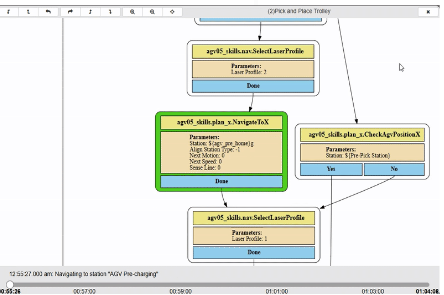
Figure 4: DF Hub for product tracking, warranty, support, and remote diagnostics.
Where DFleet Is Being Used?
DFleet has been successfully deployed across a wide range of industries, supporting automation and intralogistics in diverse operational environments:
- Manufacturing: Transporting work-in-progress materials between stations and supplying production lines
- Warehousing and logistics: Handling pick-and-place operations, replenishment, and outbound staging workflows
- Electronics and semiconductor: Synchronising robotic movements with equipment events on the production line
- Healthcare: Moving medical supplies, specimens, and equipment between departments and across facilities
- E-commerce fulfilment: Scaling operational capacity to match fluctuating order volumes and peak demand
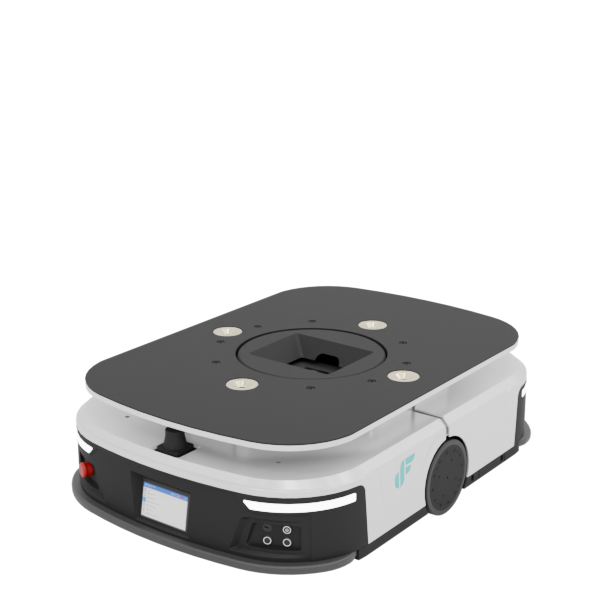
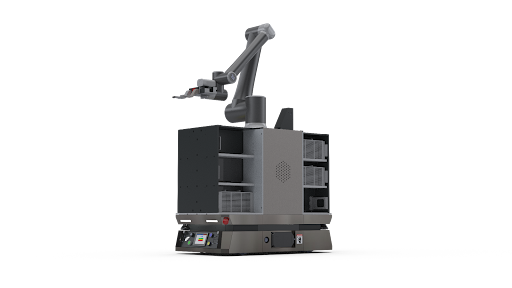
On the hardware side, DFleet integrates seamlessly with DF Automation’s AMR fleet, including the Zalpha, Titan, Zamma, Zoei, and Zyra series. These solutions support both laser-guided and trackless navigation technologies, enabling flexible deployment across a wide range of industrial requirements.
How a Fleet Management System Impacts Operations?
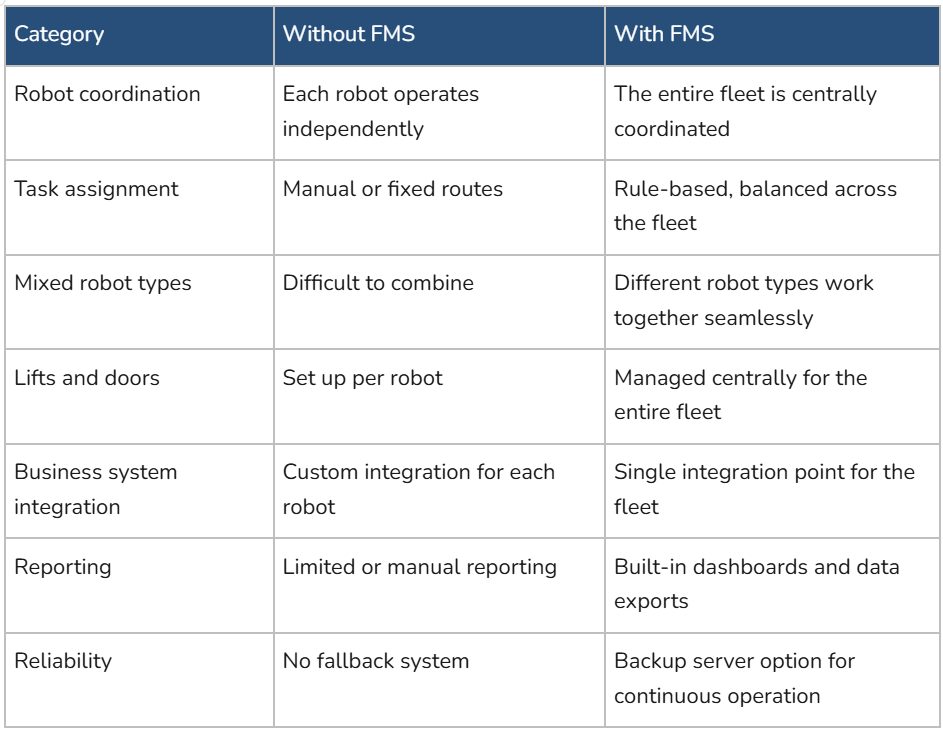
Fleet Management Systems: Enabling Industry 4.0 and NIMP 2030 Objectives
In operations running more than a few robots, the absence of a Fleet Management System (FMS) typically becomes more noticeable over time. It often leads to reduced productivity, as robots operate independently without central coordination, resulting in inefficient task execution and underutilized resources. Conflicting movements can also occur when multiple robots attempt to access the same routes or zones, increasing the risk of delays and operational disruptions.
In addition, every time a new robot is introduced into the system, integration work often needs to be repeated or reconfigured, making scalability more complex and time-consuming. Without a unified system to manage coordination, traffic, and task allocation, the overall operation becomes harder to control as it grows in size and complexity.
This is particularly important in the era of Industry 4.0, where manufacturing and warehouse operations are increasingly driven by interconnected systems, real-time data, and intelligent automation. A Fleet Management System serves as a key enabler of smart manufacturing by ensuring that multiple Autonomous Mobile Robots (AMRs) can operate as a coordinated fleet rather than as isolated machines. By centralizing control, optimizing workflows, and facilitating system integration, FMS supports the digital transformation objectives that define Industry 4.0.
This direction is strongly aligned with Malaysia’s national industrial transformation agenda, as outlined by the Ministry of Investment, Trade and Industry (MITI) through the National Industrial Master Plan 2030 (NIMP 2030). The New Industrial Master Plan 2030 (NIMP 2030) emphasizes the adoption of advanced automation, robotics, and smart manufacturing technologies to enhance industrial competitiveness and productivity.
As manufacturers move toward higher levels of automation, scalable solutions such as Fleet Management Systems play a critical role in maximizing the value of robotic investments while supporting the nation’s vision of developing a more technologically advanced, resilient, and future-ready industrial sector.
Frequently Asked Questions About DFleet and AMR Fleet Management
What is DFleet?
DFleet is a Fleet Management System (FMS) developed by DF Automation & Robotics to centrally manage and coordinate multiple Autonomous Mobile Robots (AMRs). It helps assign tasks, coordinate robot traffic, monitor fleet status, and integrate AMRs with systems such as WMS, WES, WCS, MES and ERP.
What does an AMR Fleet Management System do?
An AMR Fleet Management System coordinates multiple autonomous mobile robots within a facility. It manages tasks, robot traffic, fleet status and operational workflows, helping multiple AMRs work together efficiently while reducing conflicts and unnecessary robot movements.
How does DFleet assign tasks to AMRs?
DFleet receives transport or operational tasks from connected systems or predefined workflows and assigns them to suitable AMRs based on factors such as task requirements, robot availability and operational conditions. This allows multiple AMRs to receive and execute tasks in a coordinated manner.
Can DFleet manage multiple AMRs at the same time?
Yes. DFleet is designed to coordinate multiple AMRs operating within the same facility. It helps manage task allocation, traffic flow and fleet status so that robots can operate together without unnecessary conflicts or duplicated tasks.
What is the difference between DFleet and NavWiz?
DFleet and NavWiz serve different roles within the DF Automation AMR ecosystem. DFleet is the Fleet Management System responsible for coordinating multiple AMRs, assigning tasks and managing fleet-level operations. NavWiz is the navigation software that enables an individual AMR to perform functions such as positioning, route planning and obstacle avoidance.
Can DFleet integrate with WMS, ERP and MES?
Yes. DFleet can integrate with enterprise and operational systems such as Warehouse Management Systems (WMS), Enterprise Resource Planning (ERP), Manufacturing Execution Systems (MES), Warehouse Execution Systems (WES) and Warehouse Control Systems (WCS). These integrations allow operational tasks and information to be exchanged between business systems and the AMR fleet.
How does DFleet manage AMR traffic?
DFleet coordinates AMR movements within shared operating areas by managing fleet-level traffic and robot movements. This helps reduce conflicts between robots, improve traffic flow and support smoother material movement across the facility.
What industries can use DFleet?
DFleet can be used across various industries and environments where multiple AMRs are required for automated material movement. Potential applications include manufacturing, warehousing and logistics, electronics and semiconductor manufacturing, healthcare and e-commerce fulfilment etc.
Send us your inquiries, and we’ll get in touch with you soon!
Author: Nik Ahmad Faisal (CTO)
Editor: Shalani Krishnan
DF Automation & Robotics is one of the leading robotics companies in Southeast Asia, specializing in the design and manufacture of Autonomous Mobile Robots (AMRs) for the global automation and robotics industry. The company’s success is driven by its two proprietary AMR software solutions – NavWiz and DFleet – which are utilized across multiple industries. NavWiz serves as the cognitive engine for the robots, enabling seamless autonomous navigation, while DFleet facilitates efficient fleet management and optimizes traffic control in factory environments.
With over 500 robots deployed worldwide, DF Automation & Robotics has successfully expanded its solutions to countries such as Malaysia, Singapore, Thailand, India, Mexico, and various European nations. Visit www.dfautomation.com to learn more.